


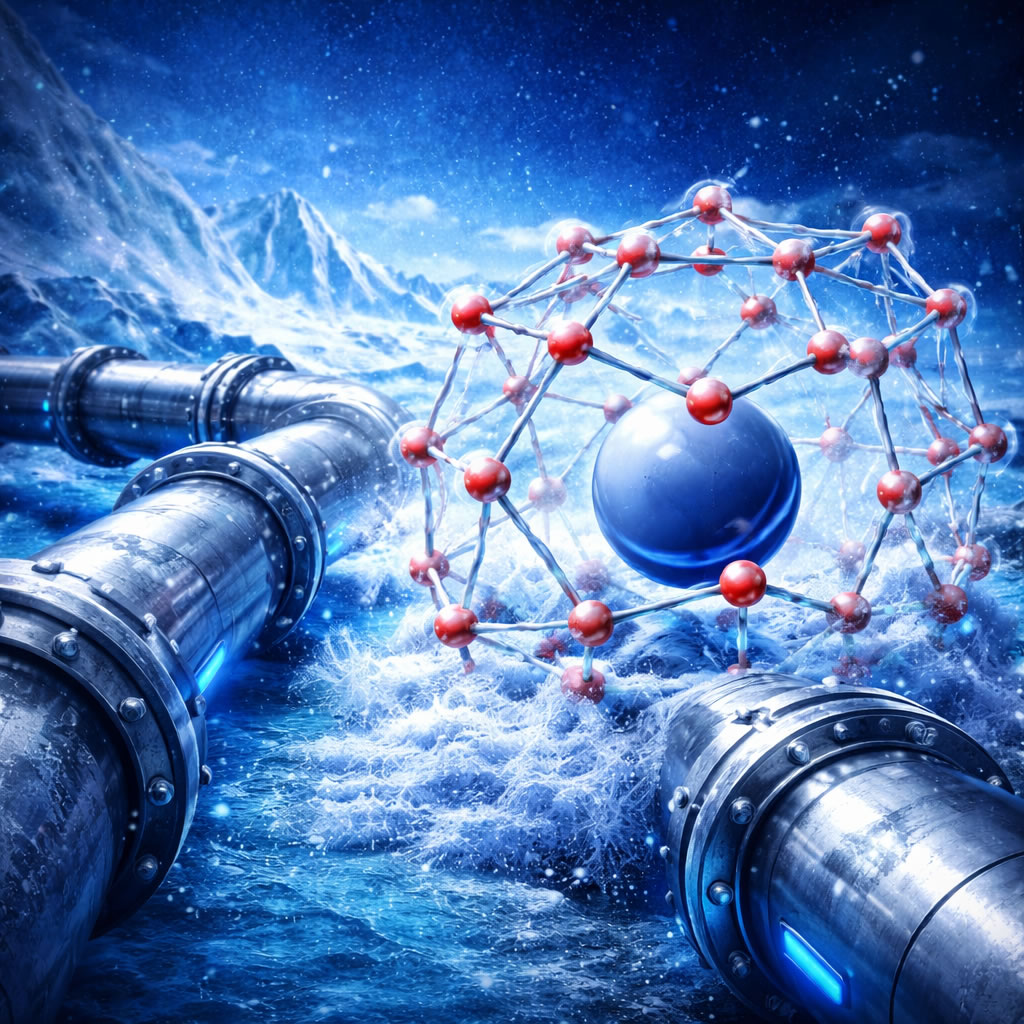
Gas hydrate is a crystalline solid consisting of gas molecules, usually methane, each surrounded by a cage of water molecules. Thus, it is similar to ice, except that the crystalline structure is stabilized by the guest gas molecule within the cage of water molecules.Gas hydrates are gas concentrators.
The decomposition of one unit. The volume of methane hydrate at a pressure of one atmosphere produces approximately 160 unit volumes of gas.Many gases have molecular sizes suitable to form hydrate, including such naturally occurring gases as carbon dioxide, hydrogen sulfide, and several low-carbon-number hydrocarbons, but most marine gas hydrates that have been analyzed are methane hydrates. Methane hydrate is stable in ocean floor sediments at water depths greater than 1,000 feet, and where it occurs, it is known to cement loose sediments in a surface layer several hundred to one thousand or more feet thick.
The morphology of gas hydrate crystals depends on water and gas compositions, pressure, temperature and phase state of water (liquid, vapor, or solid) and gas. More than ten thousand different forms of crystals were studied. Nuclei of hydrate crystals usually start to form at a gas–water interface and grow to a total coverage of the interface. Following that, crystals grow in the free gas phase or in water. There are three basic morphologic forms of hydrate crystals: massive, whiskery, and gel-like.
Natural gas hydrates are metastable minerals, where the formation and dissociation depend on the pressure and temperature, composition of gas, salinity of the reservoir water, and the characteristics of the porous medium in which they were formed. Hydrate crystals in reservoir rocks can be dispersed in the pore space without the destruction of pores; however, in some cases, the rock is affected. Hydrates can be in the form of small nodules (from 5 to 12 cm in size), in the form of small lenses, or in the form of layers that can be several feet thick.