


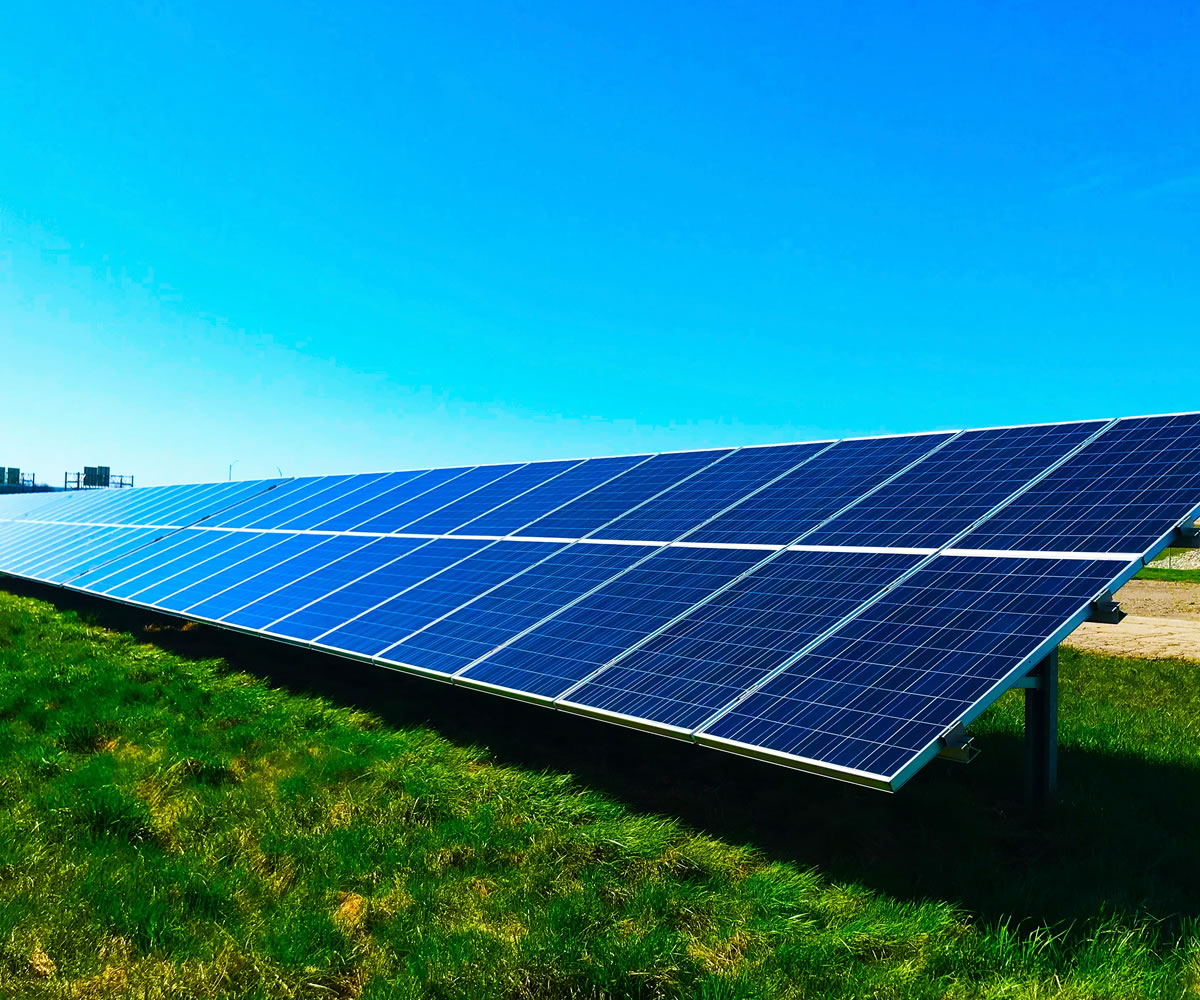
Our Solar Panel
Our solar panel solutions are designed to suit every space — from large open lands to compact rooftops — ensuring maximum energy output,
optimal performance, and long-term savings.
We provide complete support from system design and installation to
testing and maintenance, making your transition to solar simple and effective.
GROUND MOUNTED SOLAR
ROOFTOP SYSTEM
GROUND MOUNTED SOLAR
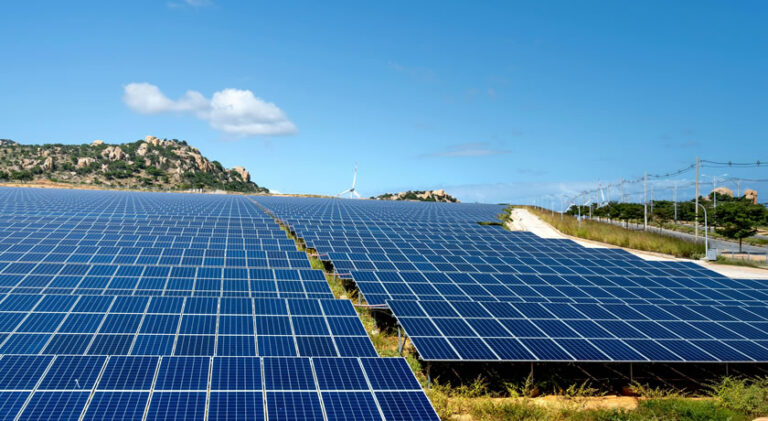
They offer greater efficiency, easier maintenance, and higher scalability than rooftop systems, especially on unused, open land.
Benefits
-
Increased Energy Generation
Because ground mount solar arrays can be oriented and tilted optimally, it is possible to increase your energy generation by approximately 10–20% compared to rooftop systems. -
Lower Operating Temperatures
Since there is generally greater airflow around ground mount solar systems as opposed to rooftop solar systems, ground mount solar panels will run cooler than rooftop modules, thus resulting in increased efficiency and extended module life. -
Easier Maintenance
Maintenance and cleaning are more accessible and less dangerous when working at ground level than on a rooftop.
Flexible Sizing
-
Ground-mount solar systems
It can be expanded easily. You can install additional panels as your energy needs increase -
Increased Property Value
By adding an energy-independent source of electricity to your property, a ground mount solar system creates long-term value.
ROOFTOP SYSTEM
Rooftop solar systems reduce electricity bills by generating clean power directly at your property, lowering dependence on grid energy.
Types
- On-Grid Solar System
- Off-Grid Solar System
- Hybrid Solar System
On-Grid Solar System
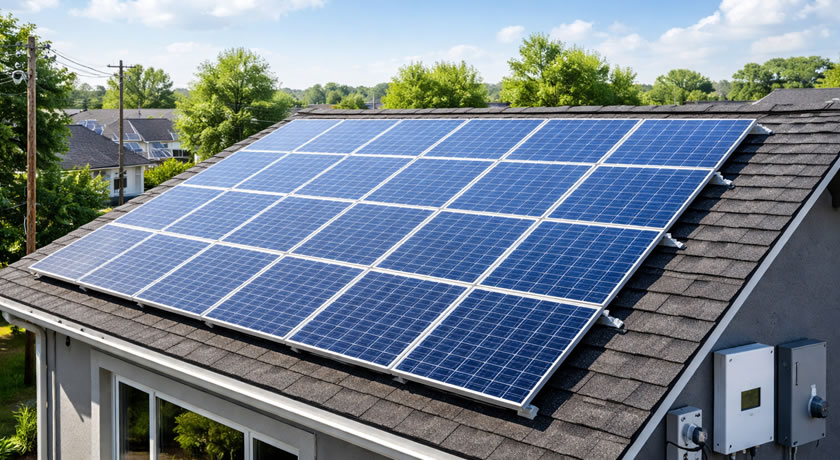
An on-grid solar system, also known as a grid-tied solar system, is a solar power system that is connected to the electricity grid. It generates electricity from solar panels and supplies it to the grid or directly powers the connected load.
Key Feature:
- Grid Connection: It works alongside the main electricity grid
- Net Metering: Excess power generated is sent to the grid, and credits are given, which reduces electricity bills.
- No Battery Required: Unlike off-grid systems, it does not require batteries for energy storage.
- Automatic Switching: If solar power is insufficient, electricity is drawn from the grid
- Government Subsidies: Many countries offer subsidies for on-grid solar installations.
Off-Grid Solar System
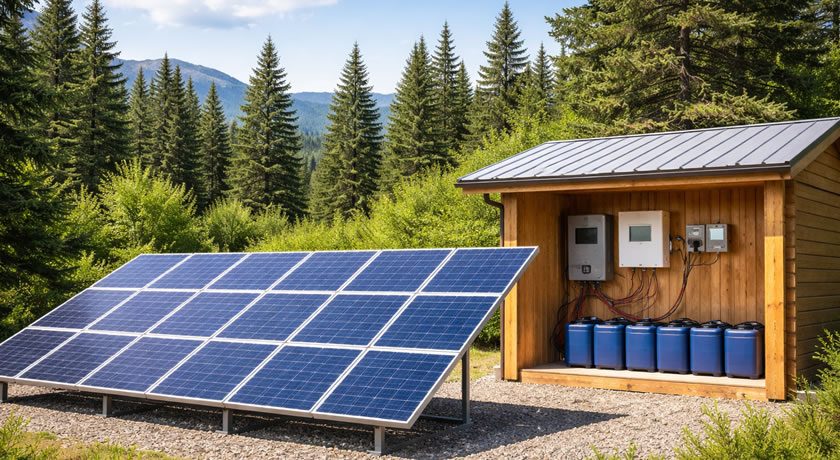
An off-grid solar system is a standalone solar power system that operates independently of the electricity grid.
It uses batteries to store excess energy generated during the day for use at night or during low sunlight
conditions
Key Feature:
- Works Without Grid: Ideal for remote areas with no electricity access
- Battery Storage: Stores excess power for a continuous supply
- No Net Metering: Since it's not connected to the grid.
Hybrid Solar System
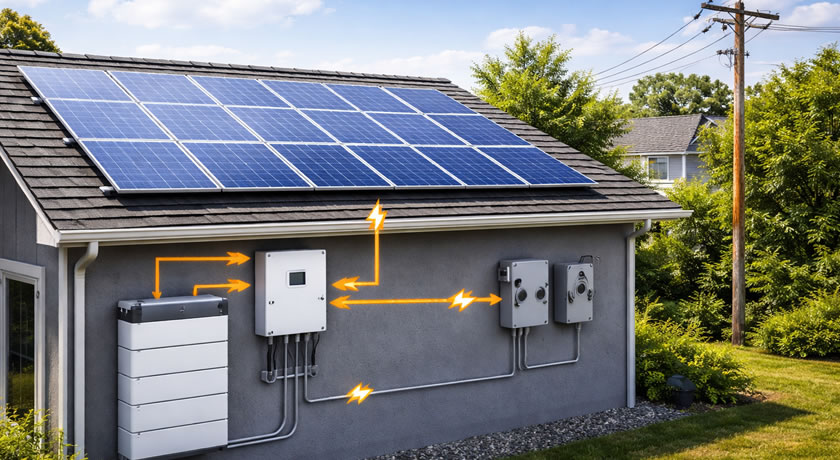
A hybrid solar system combines solar panels, a battery storage system, and a grid connection to ensure a continuous power supply